
Case study · 2022
Brixton Storr 500 Concept
Client: Brixton Motorcycles (KSR Group) · design studio RiDE
Role: Digital VR Modeller, Clay Modeller, Hard Modeller, A-Class Model.
Spin the model
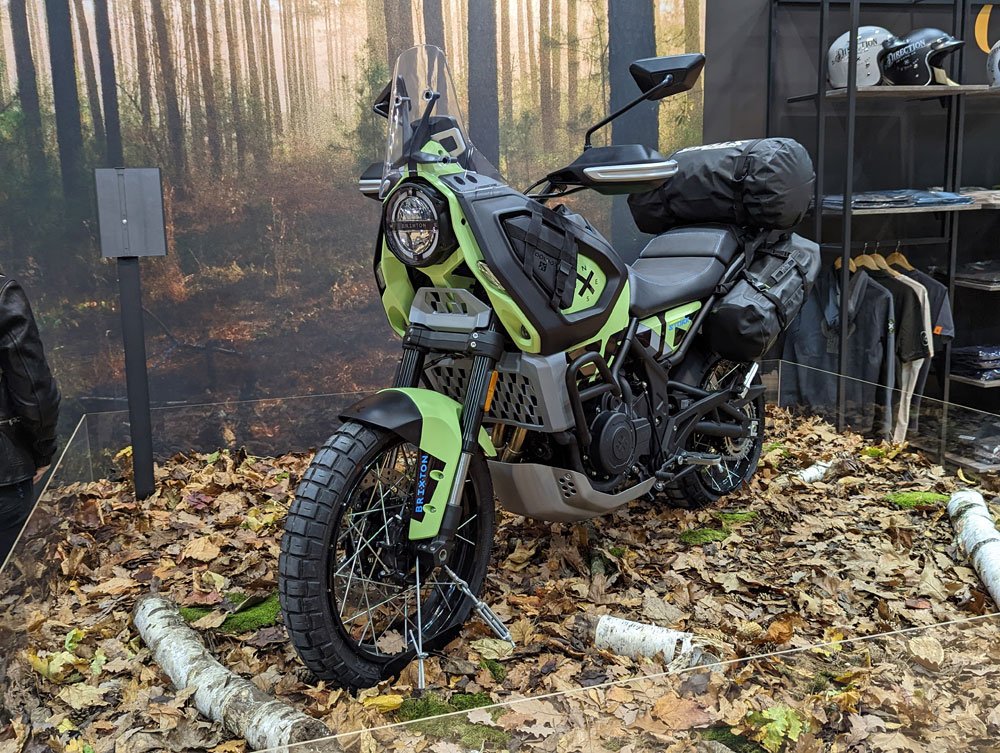
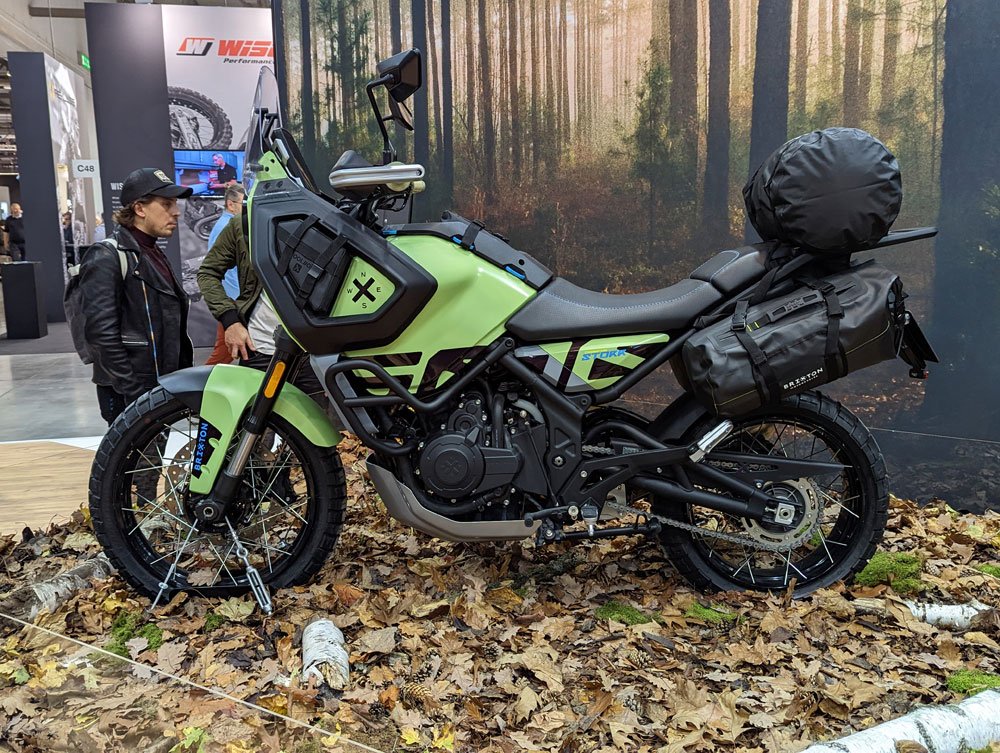
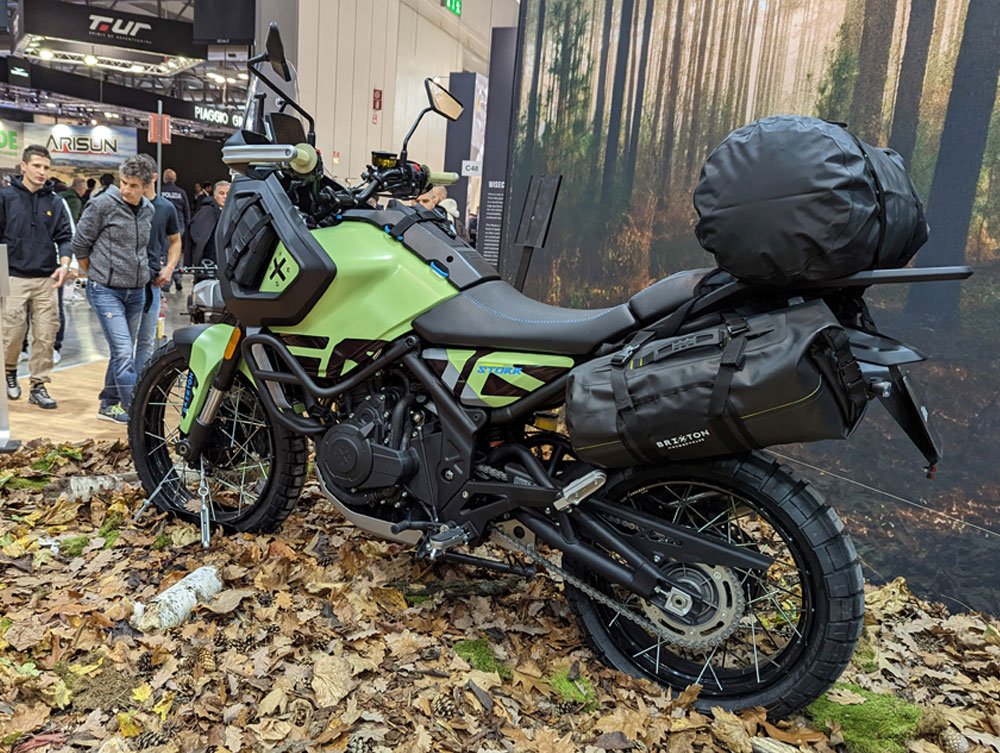
At EICMA in Milan in November 2022, Brixton Motorcycles put two concepts on its stand. One was the Layback, an electric beach cruiser. The other was the Storr — a 500cc adventure bike named after a jagged rock formation on the Isle of Skye, and the most ambitious thing the brand had ever shown. What almost nobody walking the stand knew was how its bodywork had been developed: largely in virtual reality, finished in clay, by a design team who collaborated together on the same VR model in the same VR studio whilst separated by hundreds of miles.
A brand reaching beyond its comfort zone
Brixton Motorcycles, part of Austria's KSR Group, had built its name since 2015 on approachable, retro-styled roadsters and cruisers. The Storr was a deliberate stretch — the brand's first adventure bike, and the most comprehensive redesign of its 500 platform to date. A debut in a brand-new segment has to do two things at once: look unmistakably like the brand, and look like it belongs beside established rivals. There is no margin for a surface that flatters on a monitor and falls apart in the metal.
Designed across borders, in one virtual room
The design came out of a new partnership between Brixton and the Salzburg studio RiDE — their first project together. The designer worked in Austria; I did the modelling from Germany. And yet we developed the whole thing standing around the same full-scale model, at the same time, in the same space — because the space was virtual. No shipping of bucks, no courier moving a design between countries, no waiting. Just one bike that existed everywhere and nowhere at once.
Two people, two countries, one full-scale model — in a studio with no walls.
Ninety per cent in VR, the final ten in clay
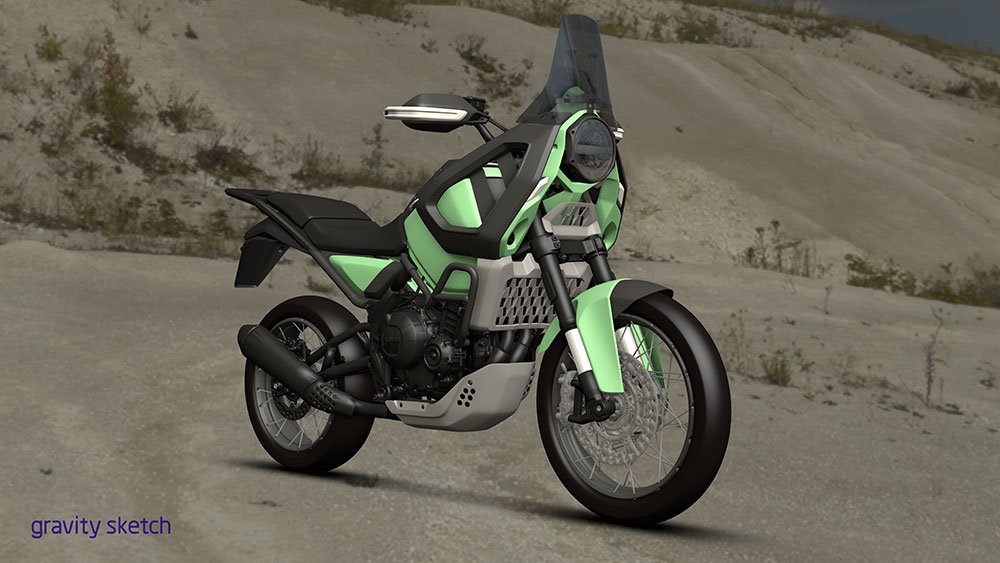
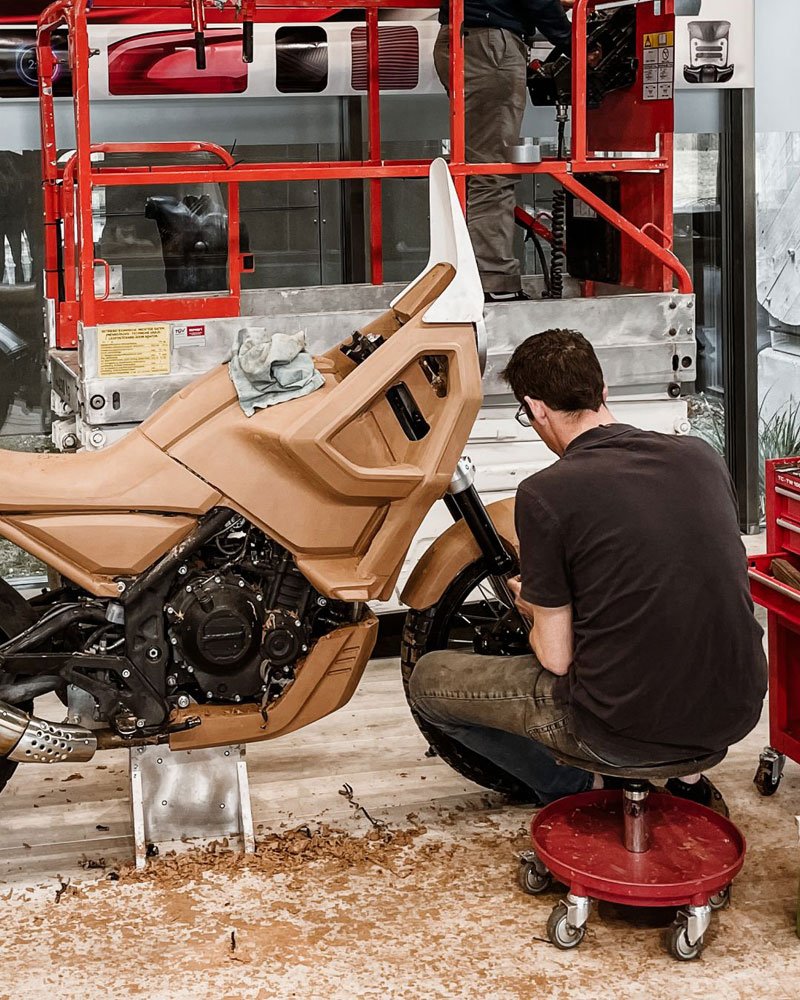
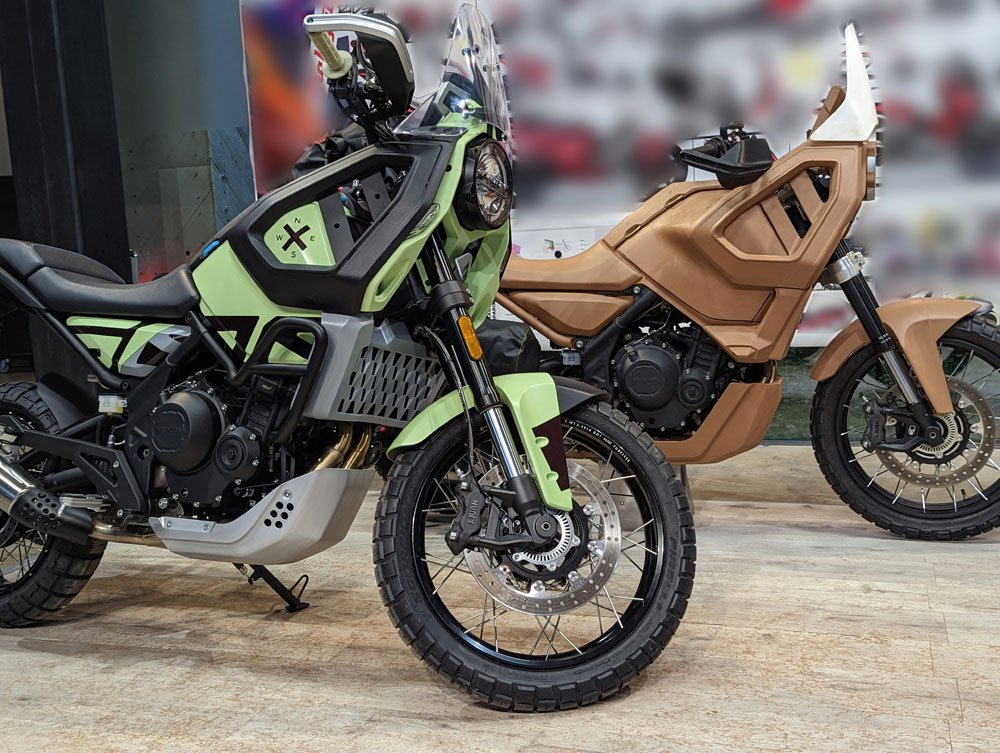
The process, pioneered through ClayMoto, inverts the traditional balance. Instead of developing the design in clay from the start, we laid it out in virtual reality in Gravity Sketch, resolving it to roughly ninety per cent at full scale — where an idea costs minutes to try, not days. Only then were the surfaces milled into clay and refined the final ten per cent by hand, in the traditional way, where a physical model genuinely earns its keep.
It is the best of both disciplines. VR carries the heavy lifting of exploration and resolution; clay does what clay has always done — the last, irreplaceable pass of a craftsman's eye and hand on a real object in real light. And the two stay astonishingly close. Walking up to a freshly milled clay after weeks in the headset, the uncanny thing is how familiar it looks.
Going from Gravity Sketch into a milled model feels so familiar — it looks exactly like the model you’ve been looking at for the last couple of weeks.
— Nick Graveley
When the clay told us something
A good process isn't one phase catching the other out — it's iteration, each pass making the design a little better. The clearest lesson the Storr taught us came when the surfaces were first milled into clay. Standing next to the full-size model, the shoulders — the top of the tank — read a touch low. The cause wasn't the design; it was how we'd been viewing it. In the headset we'd been working with our eyes roughly level with the bike, rather than standing over it the way you naturally do beside a clay model.
It's a small thing with a big consequence: a motorcycle has to be judged at one-to-one, with your eye at the correct height relative to the bike — and, ideally, in augmented reality, so you read it exactly as it will sit in the real world. Out of that we made a simple rule: every model now carries an eye-height reference, so we're always looking at it from the right vantage. And the tooling has caught up with the lesson — the Quest 3's far better passthrough gives a higher-fidelity AR view, so now we work on a model as though it's sitting on the ground in our own space, at full scale, exactly where the eye expects it.
From show stand to showroom
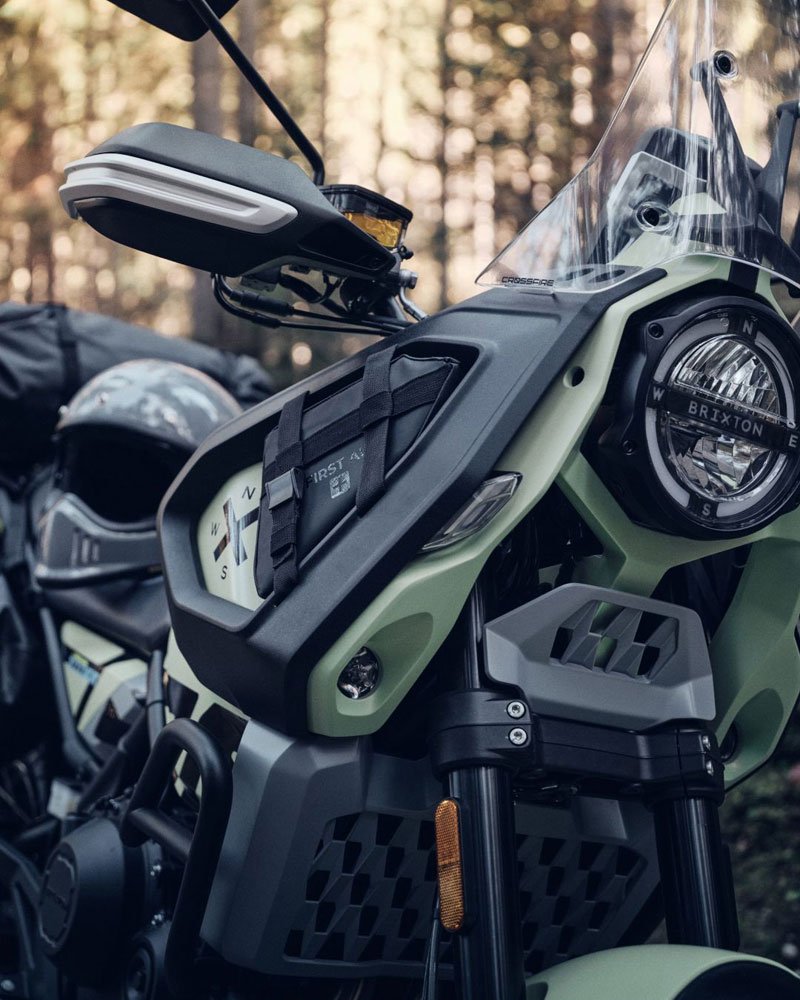
The Storr reached EICMA as a finished show bike, on time and to a standard that holds up at arm's length on a busy stand. But the more telling proof came later: the concept went into production as the Brixton Crossfire 500 Storr — a 47-horsepower, 486cc parallel-twin adventure bike you can actually buy. A shape developed mostly in a headset didn't just survive contact with a show floor; it survived contact with manufacturing, and reached real roads.
And this was never just a pretty show-stand shape. Working in VR, we built the engineering into the model from the start — assembly order, tooling and flange directions, clearances, the lot — so that when the data reached the engineers, there was very little left to resolve. That means minimal rework, and faster to market.
Elevated design quality and development efficiency, it turns out, are no longer a trade-off you have to choose between. One empowers the other.
Gallery
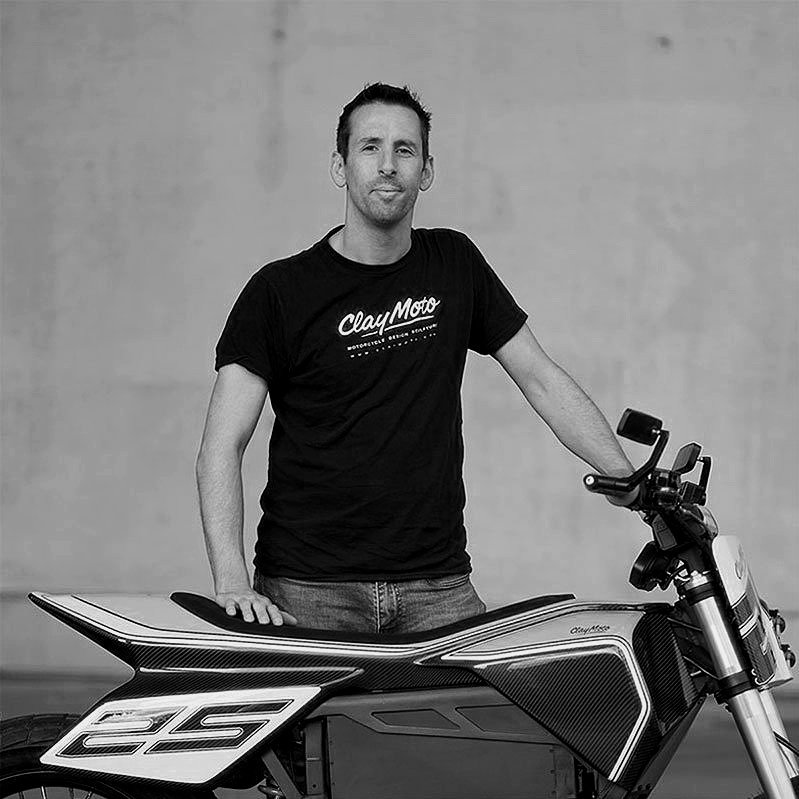
Nick Graveley, founder of Sculpt 3D, is the pioneer of VR concept modelling for the motorcycle industry — 25 years sculpting motorcycles for OEMs, Gravity Sketch certified instructor, modeller of the Lightfighter electric race bikes and multiple large OEM production motorcycles.