
For motorcycle manufacturers
VR concept modelling for motorcycle OEMs.
Full-scale bodywork sculpted in virtual reality, judged in real space, and handed back clean enough to tool from. Months off the programme — and a better model at the end of it.
Start a conversationA motorcycle is one of the hardest things in industrial design to get right. There is nowhere to hide a bad surface. The bodywork is sculpture you sit on — read in three-quarter view from across a car park, then again from eighteen inches away as a rider swings a leg over it. For a century, the only way to resolve a form that demanding was clay: a designer and a skilled modeller, stood around a full-size buck, making ten thousand small decisions by eye and by hand.
VR modelling brings that exact discipline into a digital workflow. We sculpt the bodywork at 1:1 inside a headset, rendered in the right materials with real reflections, with the rider package and engineering hard-points loaded so every call is informed. You walk around it. You look down the line of the tank. You reach out and move an edit point and watch the highlight travel across the surface in real time. It is clay-modelling judgement, with none of clay's cost, mess or distance from the data.
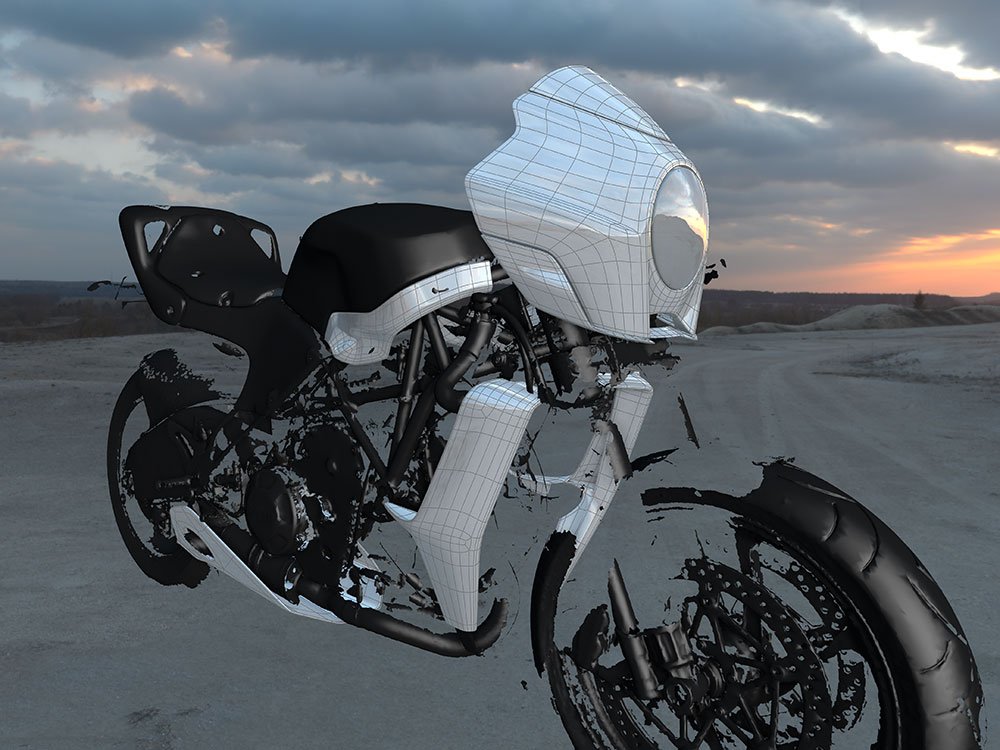
Why a 2D monitor is the wrong tool for a 3D object
For decades we modelled three-dimensional objects through a small two-dimensional window, at a shrunk-down scale, with a mouse that only moves in two axes. The result is a quiet, expensive problem the whole industry has learned to live with: the model on the CAD screen and the model in the real world are not the same thing. You sign off a surface on the monitor, mill it, walk around it — and it has changed.
That gap is where programme time goes to die. Re-mill, review, re-mill. VR closes it. What you approve at full scale in the headset is what arrives in the room, because you were never looking at an abstraction in the first place.
How a VR programme runs inside your studio
Every studio is different, and the engagement is built around yours. The shape is consistent, though. We start from the designer's sketch intent and block the major volumes in VR fast — proportion first, while it is cheap to change. From there we resolve the surfaces with the designer present, beaming into the same virtual space from wherever they are in the world, grabbing the model, drawing 3D curves in the air to make a point, shrinking down to ant-scale to check a clearance.
Where a physical clay still earns its place — ergonomic validation, a board-level presentation — we mill one from the VR model and finish it traditionally. Then we take what the clay taught us back into VR for final refinement. Typically a month-long clay development phase becomes a couple of weeks of VR, a couple of days of clay, and a couple more weeks of VR. I have also delivered complete programmes with no clay at all.
Proof · Lightfighter Racing
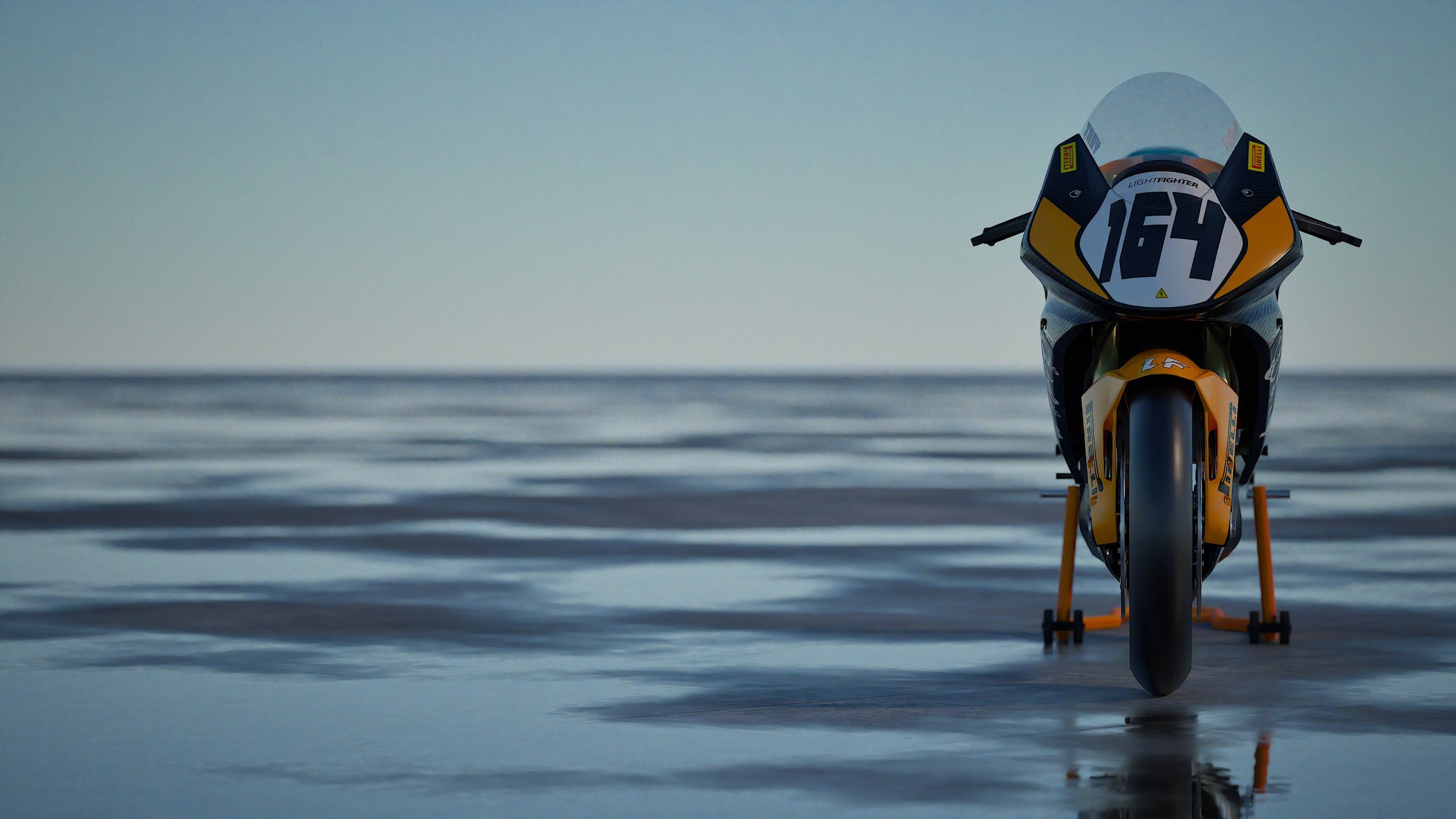
Read the Lightfighter case study →"Not only were we able to see it at full scale and reach a high level of design refinement digitally, we were also able to skip the clay model completely and tool up directly for carbon-fibre parts with a ton of confidence."
Common questions
-
What is VR concept modelling for motorcycles? +
It is the practice of sculpting a motorcycle’s bodywork as a full-scale digital model inside a VR headset, using two hand controllers, instead of through a mouse on a flat monitor. The designer and modeller stand around the model at 1:1, judge proportion and surface the way they would on a clay model, and edit it directly with their hands — while keeping every advantage of working digitally.
-
How much programme time does VR modelling actually save? +
On real OEM motorcycle programmes we routinely replace month-long clay development phases with a couple of weeks of VR modelling, a short clay validation pass, and a final VR refinement. The concept-modelling phase that used to run for weeks is measured in days. The saving compounds because the surfaces come out clean enough to send straight to tooling, removing whole re-mill loops.
-
Are the surfaces good enough to manufacture from? +
Yes. Carefully built Sub-D topology yields highlight-clean, technically compliant surfaces — not A-class, but close, and resolved enough that Lightfighter Racing tooled directly for carbon-fibre parts from the VR model with no clay loop at all.
-
Do you work with our internal design team or replace them? +
Alongside them. The modeller’s job is to empower the designer — balancing their direction against engineering and tooling constraints, and shaping it at a level of craft most studios cannot resource in-house. I can also train your team so the capability stays with you.
Bring your next motorcycle to the headset.
Whether you want a modeller on a live programme or your own team upskilled, the first step is a conversation about the bike.
Start a conversation