
Case study · 2021 – present
The Lightfighter
Client: Lightfighter Racing
Role: Digital VR Modeller — designer collaboration with Fabien Rougemont (Redster Design) and founder/engineer Brian Wismann.
Footage courtesy of Lightfighter Racing
2026 Lightfighter V3-RS — spin the model
Powered by FormChasers — our own platform for capturing and sharing photo-real 3D scans of real-world objects. Open the full viewer →
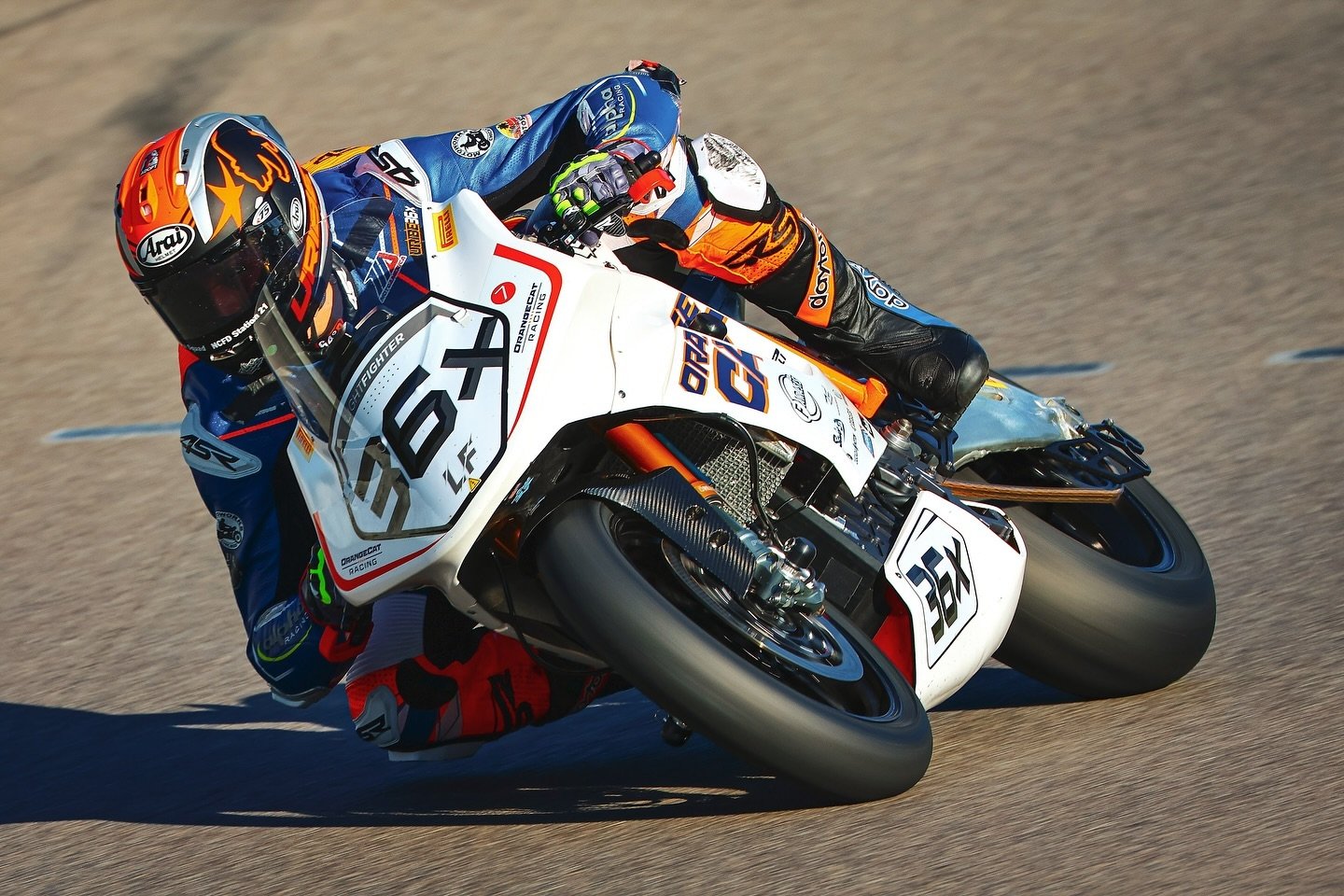
On a May weekend at Barber Motorsports Park, a near-silent motorcycle rolled onto a MotoAmerica podium. Josh Herrin had put the Lightfighter V3-RH into second place — the team's first MotoAmerica podium, and one of the very few times an electric bike has finished a premier American road race on the rostrum, surrounded by combustion machinery that has had a century's head start. Not one surface of the bodywork that bike wears was ever touched by clay. Every line of it was sculpted at full size inside a virtual-reality headset.
We have been the Lightfighter's design-modelling partner from early in its story — and the start of that story is the part worth telling, because it began as an experiment in whether a VR sketching tool could possibly be good enough to do serious professional work.
A zero-budget experiment
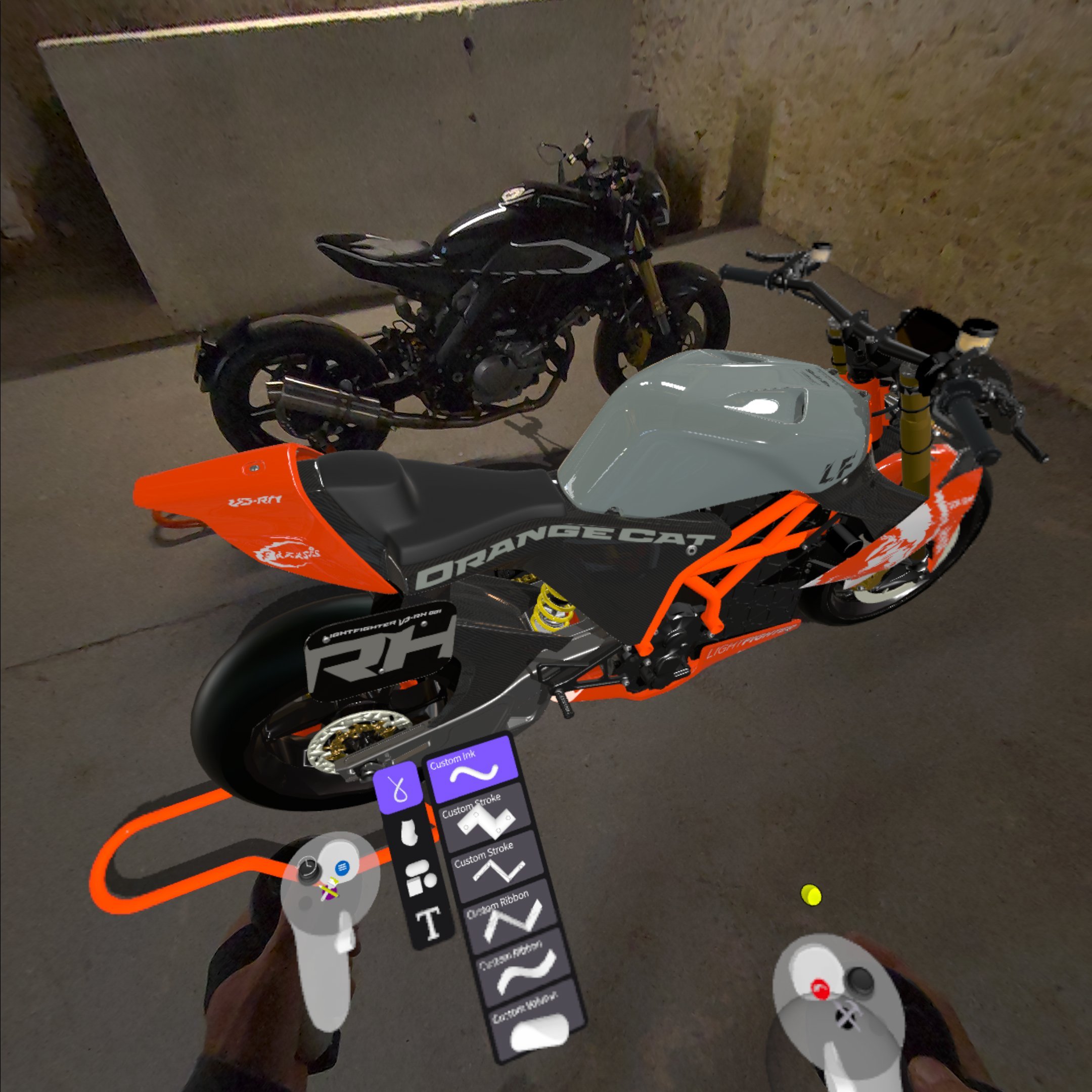
Long before the podium, the Lightfighter was an after-hours obsession built on no budget at all. The designer Fabien Rougemont and I shared a hunch: that Gravity Sketch — a tool much of the industry still thought of as a sketching toy — could be pushed to do genuinely professional surface work. The Lightfighter is where we went to find out. With no money for clay, no studio, and nothing to lose, we set about developing the bike's bodywork entirely in VR.
For me it was as much a homecoming as an experiment. After two decades sculpting full-size clay models by hand, here at last was a way to work the way I actually think — fully in three dimensions, at real scale, by eye — but digital. No armature, no mess, no waiting on a mill. Just the form, in the room, ready to be pushed and pulled until it was right.
Could a VR sketching tool really do professional-grade work, on a project with no budget at all? The Lightfighter is where Fabien and I went looking for the answer — and found it.
The engineer behind it
The Lightfighter is the work of Brian Wismann, who has spent a career arguing — in metal — that electric motorcycles can be desirable rather than merely worthy. At Brammo he created the Enertia and the Empulse; he ran race programmes at the Isle of Man TT; and he went on to lead product development at Zero Motorcycles. The Lightfighter started as his own private answer to a question that wouldn't leave him alone: what a privately-built electric race bike could actually do.
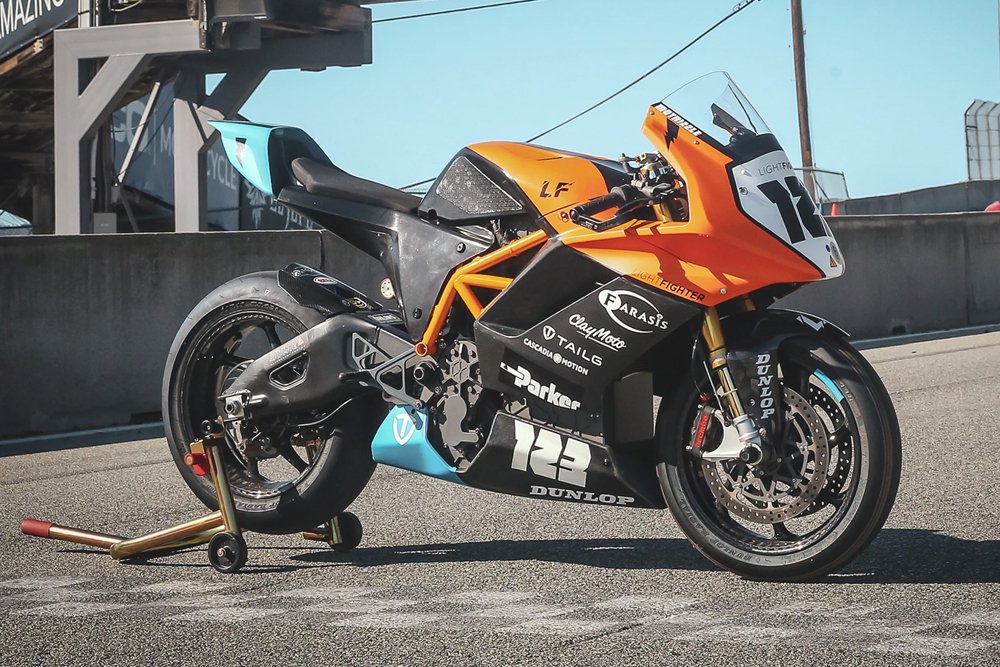
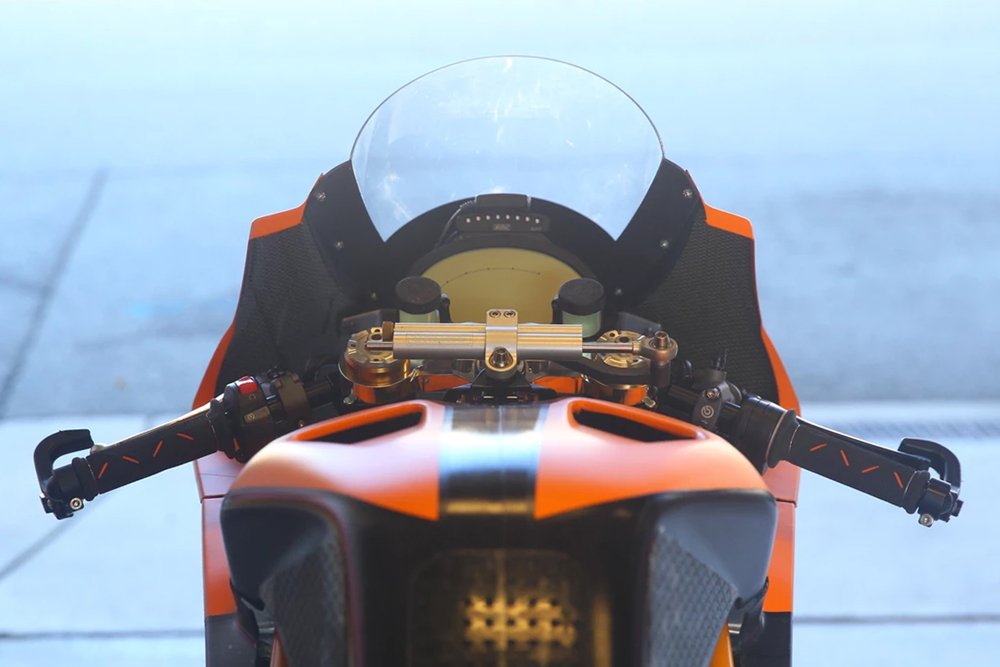
The first of these was the V2-RS — a fully-faired bike in orange and black, the one still wearing the Sculpt 3D and ClayMoto decals in the old photos. It was quick, it won races, and, more importantly for what came next, it proved the workflow. The VR model held up in the real world. The surfaces were real. The toy was a tool.
One bike, two suits of clothes
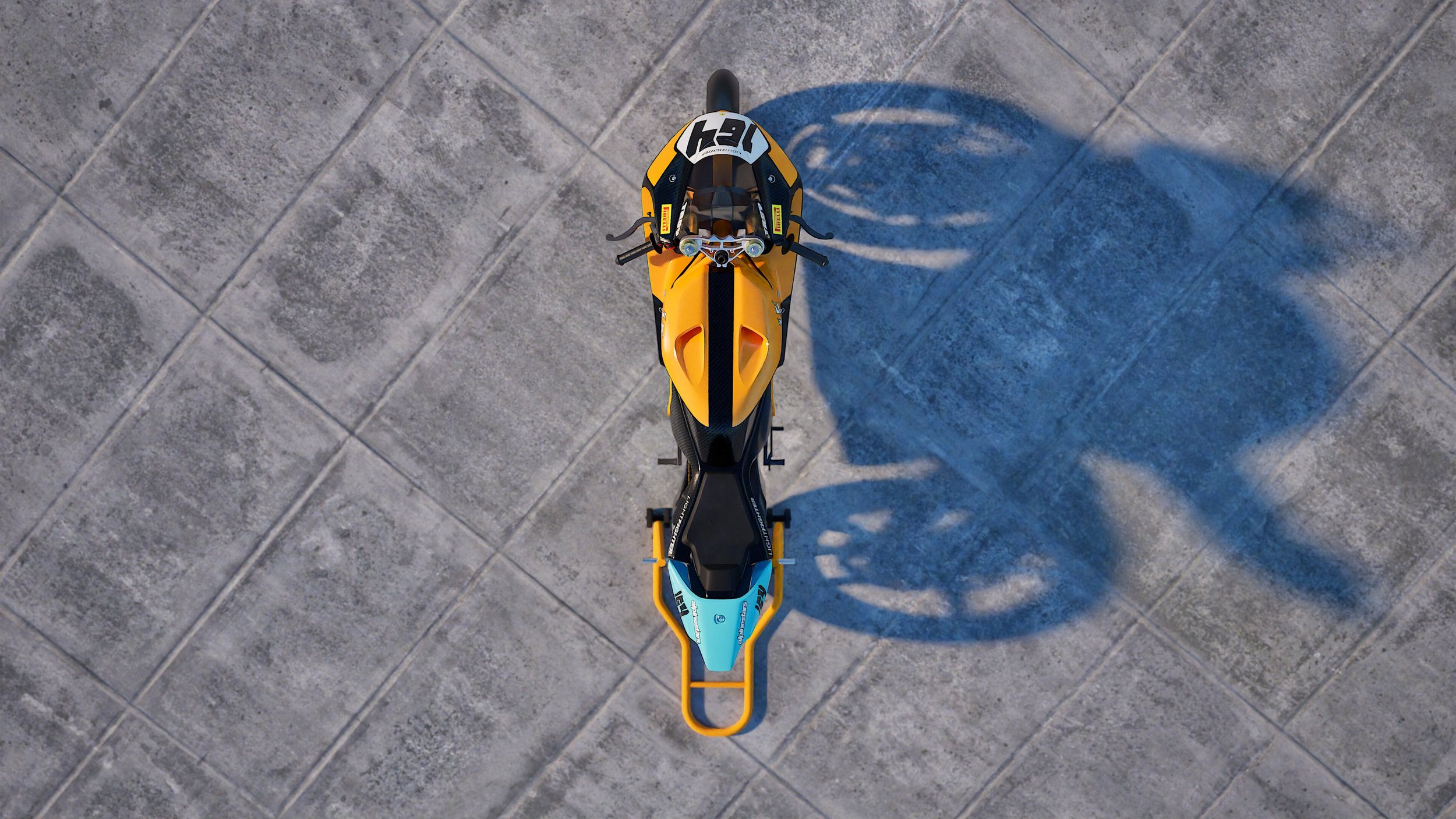
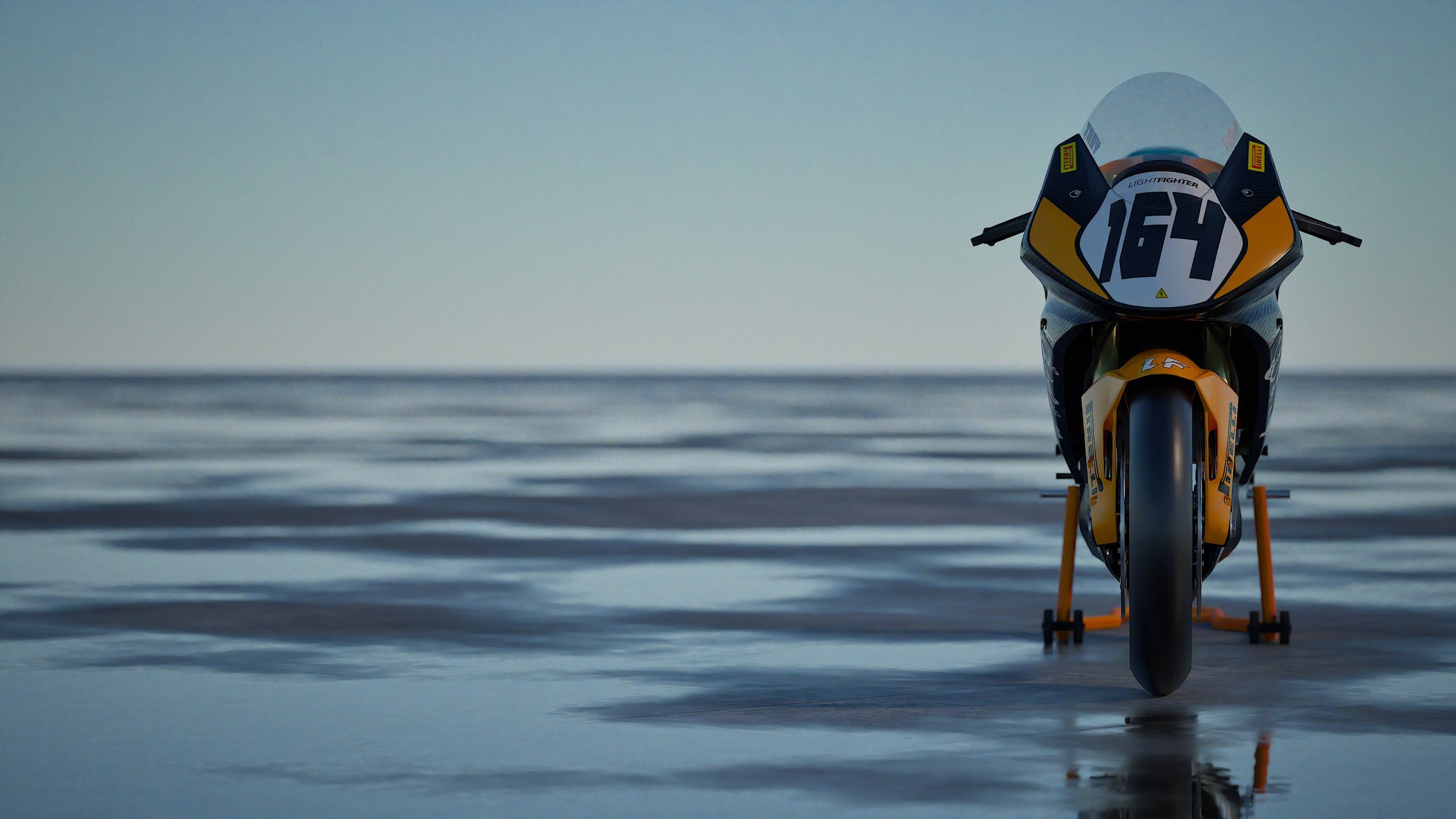
Today the Lightfighter is the V3 platform — the third iteration of Brian's long-running programme — and it lives in two distinct forms. The V3-RS is the faired supersport, the one chasing lap records across the United States. The V3-RH is its naked twin: fairings stripped away, bars raised, built to race in the MotoAmerica Mission Super Hooligan championship. As the team puts it, they are basically the same bike wearing different clothes.
That distinction is exactly where VR modelling earns its keep. A faired bike can hide its structure; a naked one has to celebrate it. The exposed orange trellis frame was already there — a fixed point we left untouched and designed around — so the job was resolving every bodywork surface in the open against it: tank, seat unit, radiator shrouds — at full scale, where the eye cannot be fooled. By this stage I'd already modelled many large OEM motorcycles, so it came together remarkably fast — end-to-end in Gravity Sketch across roughly a month of sporadic after-hours sessions, a fraction of what a traditional workflow would take — reviewing it with Brian as though it were standing in the room, then 3D-printed representative parts directly from the digital model.
The tool allowed us to rapidly visualise the changes required to the V3-RS. It was also helpful to collaborate with the design team in the UK.
— Brian Wismann, Founder, Lightfighter Racing
Why not clay
Traditionally a bike like this is resolved in clay, by hand, over weeks. For a small privateer team it was never an option — and that constraint turned out to be a gift, because it forced us to prove that VR could carry the entire job. It can. You judge proportion at one-to-one, in real materials, with the engineering loaded; you grab a surface and watch the highlight travel across it as you move it; and a designer in France, an engineer in California and a modeller in the UK can all stand around the same full-scale model at once. The old gap between the screen and the real object — the thing that quietly wrecks so much design work — simply closes.
The bike doing the talking
For 2026 the V3-RH lines up in the Mission Super Hooligan series in OrangeCat Racing colours, ridden by Josh Herrin and Kaleb De Keyrel, with a public demo tour putting ordinary riders on the bike at tracks across California. It is quieter than everything it races, and it makes its statement anyway.
That is the part worth sitting with. A bike that began as a no-budget test of whether VR could do real work now shares podiums with factory combustion machinery — its every surface shaped in a headset, by hand, in three dimensions. The Lightfighter was the question. It turned out to be the proof.
Motorcycle innovation
Development of the Lightfighter.
"Lightfighter is a passion project for a few industry professionals — and the dream of having our own bodywork would have remained a dream if it were not for the VR tools. Not only were we able to see it at full scale and reach a high level of design refinement digitally, we were also able to skip the clay model completely and tool up directly for carbon-fibre parts with a ton of confidence."
"Really happy with the way the bike turned out — it looks great, makes us incredibly proud, and although the bike is comparatively quiet, it makes a heck of a statement out on a race track."
Gallery
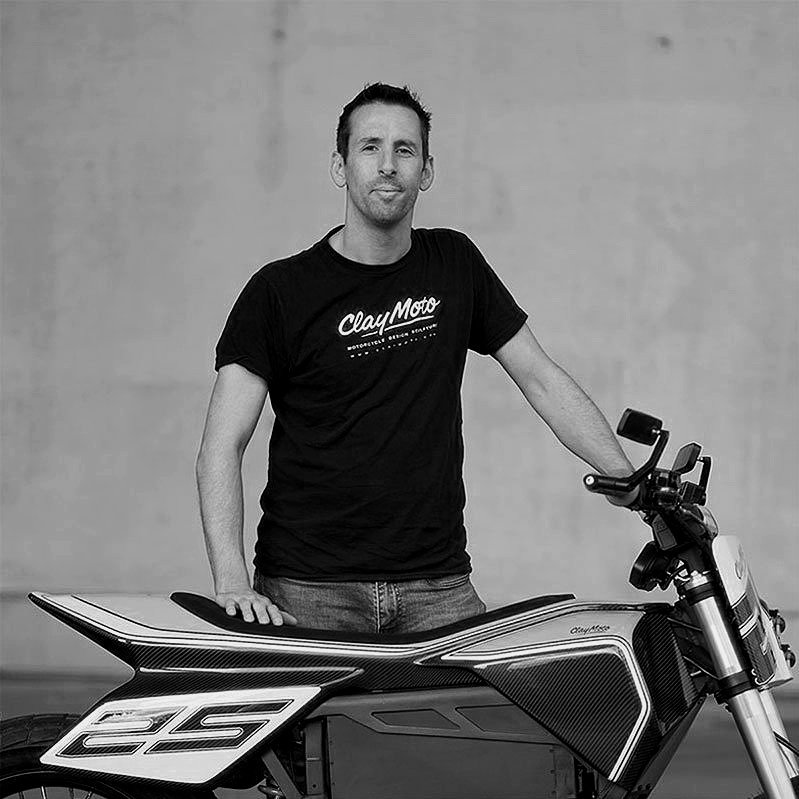
Nick Graveley, founder of Sculpt 3D, is the pioneer of VR concept modelling for the motorcycle industry — 25 years sculpting motorcycles for OEMs, Gravity Sketch certified instructor, modeller of the Lightfighter electric race bikes and multiple large OEM production motorcycles.